Overview
This guide outlines practical, safe and regulation-minded approaches to training drone (UAV) operators and developing UAV instructor education in Novokuznetsk, Russia. It covers course structure, instructor qualifications, local operational considerations, industry partnerships, and next steps for launching or joining a program.
Why Novokuznetsk?
— Novokuznetsk (Kuzbass) has strong industrial and infrastructure sectors — mining, metallurgy, forestry and municipal services — where professional drone services are in demand.
— Local needs create opportunities for certified operators and qualified instructors supporting inspections, mapping, monitoring and emergency response.
Regulatory and safety foundation (must-do)
— Always comply with current Russian civil aviation rules and permissions administered by the Federal Air Transport Agency (Rosaviatsiya) and regional authorities.
— Mandatory steps typically include registration of certain UAS, pilot certification or proof of competency for commercial operations, and approvals for specific flights (e.g., beyond visual line of sight, urban or industrial sites). Check up-to-date rules before training or operations.
— Insist on written risk assessments, operational approvals, insurance and local coordination (airport/municipal/industrial site notifications) for each operation.
Core curriculum for drone operator training
Recommended modules (basic-to-advanced). Course length may vary from an intensive 3–6 week program to a longer part-time diploma.
1. Introduction and regulations
— Russian UAS law basics, airspace classes, no-fly/restricted areas, registration and permissions, privacy and data protection.
2. Aircraft systems & maintenance
— Platform types, batteries, propellers, basic fault finding, pre-/post-flight checks, storage and transport best practices.
3. Flight theory & meteorology
— Principles of flight, effects of weather, wind, cold temperatures (battery performance), and planning around daylight seasonality.
4. Flight skills (simulator + practical)
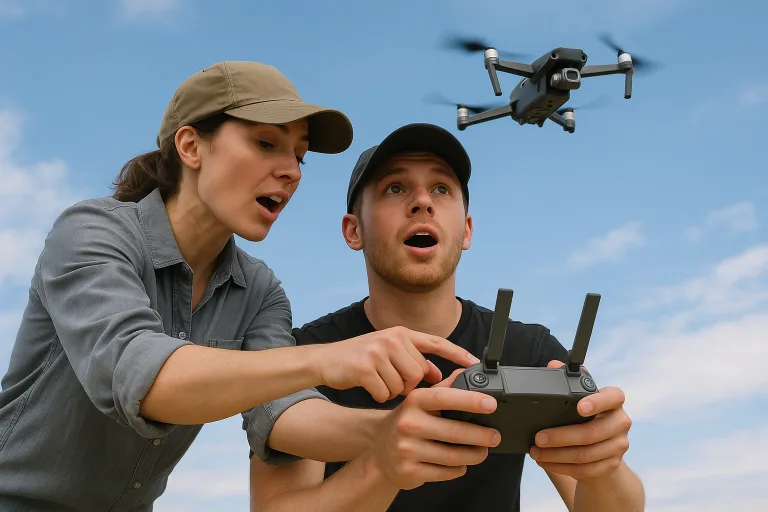
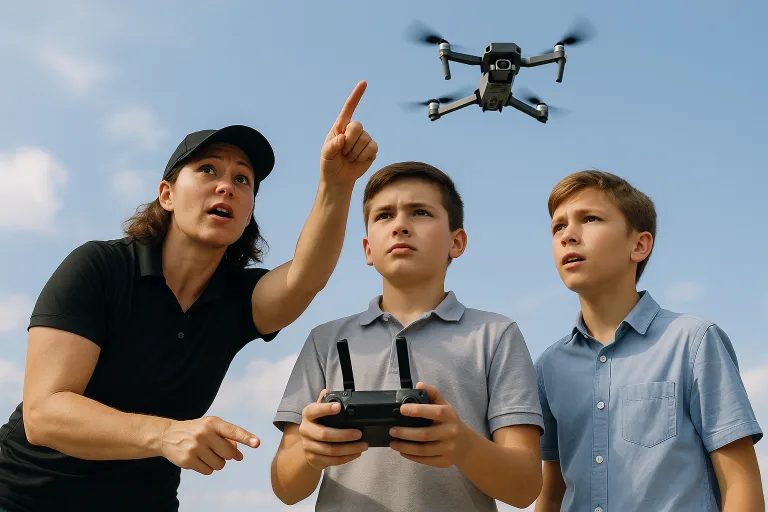
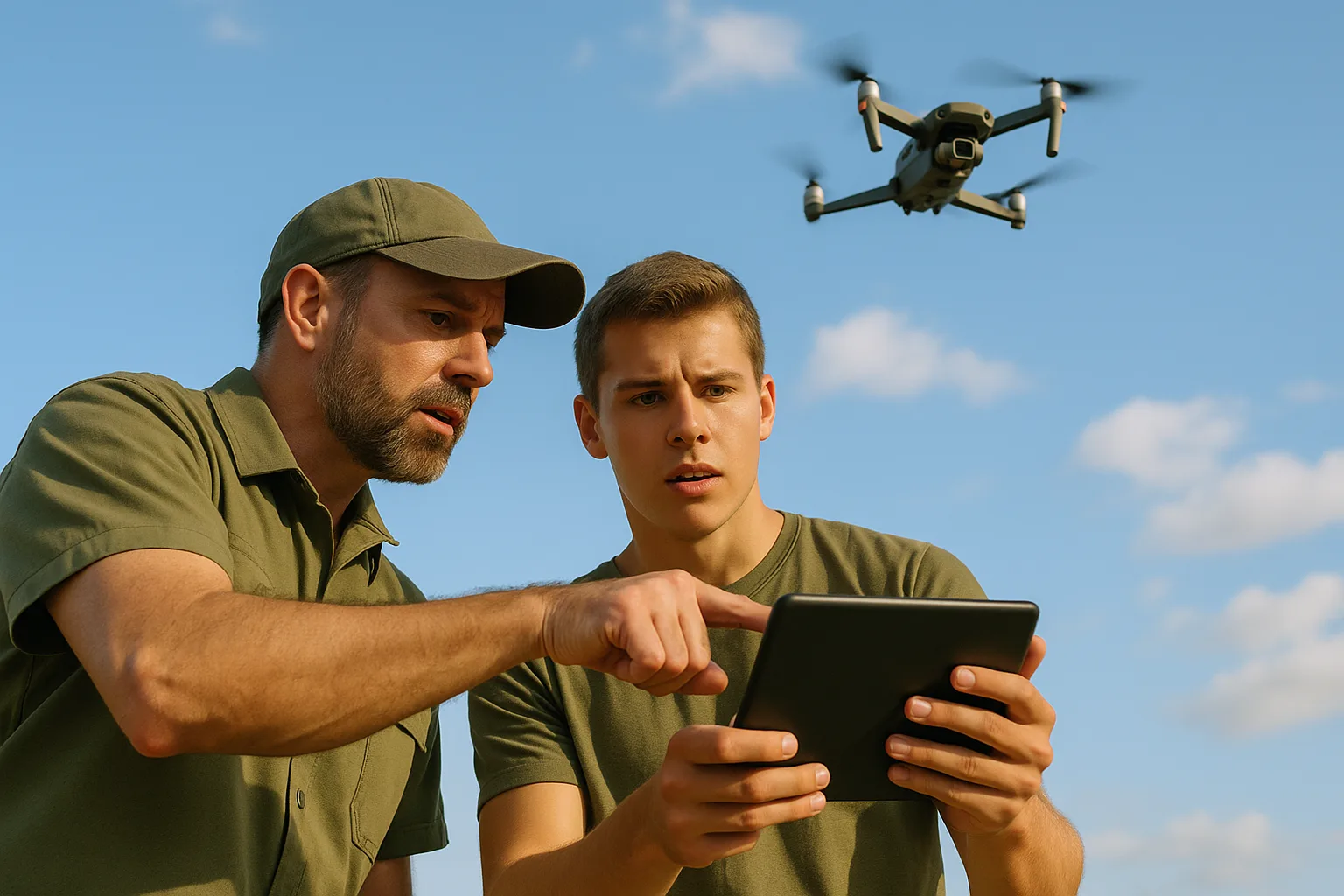
— Basic maneuvers, takeoff/landing, position-holding, emergency procedures and handling anomalies — practiced first in simulators, then supervised field flights.
5. Mission planning & operations
— Route planning, risk assessment, crew roles, communications, payload and data capture planning.
6. Sensors and payloads
— RGB cameras, multispectral, thermal imaging basics, data collection standards for inspections and mapping.
7. Photogrammetry and data processing (overview)
— Fundamentals of imagery capture for orthophotos/3D models and quality control principles (avoid step-by-step software instructions that facilitate misuse).
8. Safety management & human factors
— SOPs, checklists, CRM-style coordination, fatigue and decision-making, accident reporting.
9. Professional practice
— Contracts, insurance, data handling, ethics, sector-specific workflows (mining, utilities, forestry, emergency services).
UAV instructor education: building competent teachers
— Prerequisites for instructor candidates:
— Demonstrable flight experience (minimum logged hours as per local practice), knowledge of regulations, and professional operational experience.
— Instructor training components:
— Adult learning theory and pedagogy, lesson planning, assessment methods, simulator-based instruction techniques, practical flight coaching, scenario-based training design.
— Assessment and certification:
— Combined written exams, demonstrated instructing sessions (classroom and flight), and supervised apprentice instructing hours.
— Continuous professional development:
— Regular recency checks, safety culture reviews, updates on regulations and emerging technologies.
Sample 8-week course schedule (operator + instructor track)
Week 1–2: Regulations, theory, aircraft systems
Week 3: Simulator sessions, emergency procedures
Week 4–5: Practical flight training (basic to advanced maneuvers)
Week 6: Mission planning, payload work, data collection principles
Week 7: Safety management, human factors, industry workflows
Week 8: Assessment, instructor pedagogy module (for instructor candidates), certification exams, final practical checkride
Facilities and equipment checklist for a training center
— Indoor classroom with AV.
— Flight simulators and training software.
— Fleet of training UAS (consumer + professional models) with spare parts and charging infrastructure.
— Safe outdoor flight areas: large open fields, an industrial training pad, and access to urban/industrial sites with permission.
— Workshop area for maintenance and pre-/post-flight checks.
— Medical kit, fire extinguisher, PPE, and checklists visible to students.
Local operational considerations for Novokuznetsk
— Climate: cold winters affect battery life, sensors and preflight procedures. Include cold-weather ops training and battery care.
— Industrial environment: many flights will support mining and plant inspections — emphasize site safety, PPE and coordination with on-site safety officers.
— Seasonal daylight: plan training schedules around available daylight in winter months and account for extreme weather cancellations.
— Permissions: coordinate with municipal authorities, airports and large industrial sites well in advance; mining operations may require special access and safety briefings.
Building partnerships and finding students / employers
— Reach out to local:
— Mining and metallurgical companies, construction firms, forestry operations and municipal services.
— Vocational colleges and regional universities for joint programs or credit