Introduction
Novokuznetsk and the Kuzbass region present strong demand for skilled UAV operators and qualified instructors. Local heavy industry (mining, metallurgy), infrastructure, environmental monitoring and emergency services all benefit from reliable drone programs. This article outlines practical course structures, regulatory considerations, equipment and facility needs, and a roadmap to launch a professional UAV operator and instructor education program in Novokuznetsk.
Local context & market opportunities
— Key sectors that use drones in Novokuznetsk / Kuzbass:
— Coal and open-pit mine surveying, volumetrics and stockpile monitoring
— Metallurgical plant inspections and asset maintenance
— Infrastructure and bridge inspection, rail corridor surveillance
— Environmental monitoring, forest fire prevention and land rehabilitation
— Precision agriculture and land management in surrounding areas
— Emergency response, search & rescue support, and public safety
— Advantages of a local training center:
— Shorter response times and field practice in regionally relevant conditions (cold weather, varied terrain, industrial sites)
— Access to local clients for internships and job placement
— Cross-sector partnerships with industrial operators, municipal services and technical colleges
Regulatory & compliance overview (Russia)
— Register UAVs and operators as required by national aviation authorities; follow Rosaviatsiya and local aviation regulations.
— Understand airspace rules, NOTAMs, temporary restrictions and permissions required for flights over industrial sites or populated areas.
— Ensure student training includes legal and ethical use, privacy, and data protection standards.
— Maintain insurance and risk assessments for training flights and commercial operations.
Suggested training program structure
1. Basic UAV Operator Course (2–5 days)
— Introduction to UAV types and systems (multirotor, fixed-wing, VTOL)
— Aviation basics: airspace classes, meteorology, flight planning
— Safety, pre-flight checks, basic maintenance and troubleshooting
— Manual flight fundamentals, takeoff/landing, emergency procedures
— Introduction to aerial photography, basic mapping and data handling
— Written test + practical flight assessment
2. Advanced Operations & Payloads (3–7 days)
— Photogrammetry, mapping workflows, orthomosaic generation
— LiDAR/thermal/inspection payload operation and data interpretation
— BVLOS fundamentals, visual observer protocols and risk mitigation
— Night operations and low-visibility procedures (where permitted)
— Mission planning software and workflow automation
— Advanced emergency and contingency procedures
3. Industry-Focused Modules (1–3 days each)
— Mining & volumetrics
— Infrastructure inspection (bridges, rails, plants)
— Agricultural mapping and crop health assessment
— Emergency services & SAR coordination
4. UAV Instructor Education & Certification (5–10 days)
— Adult learning theory and instructional design for technical subjects
— Lesson planning, classroom delivery, simulation-based training techniques
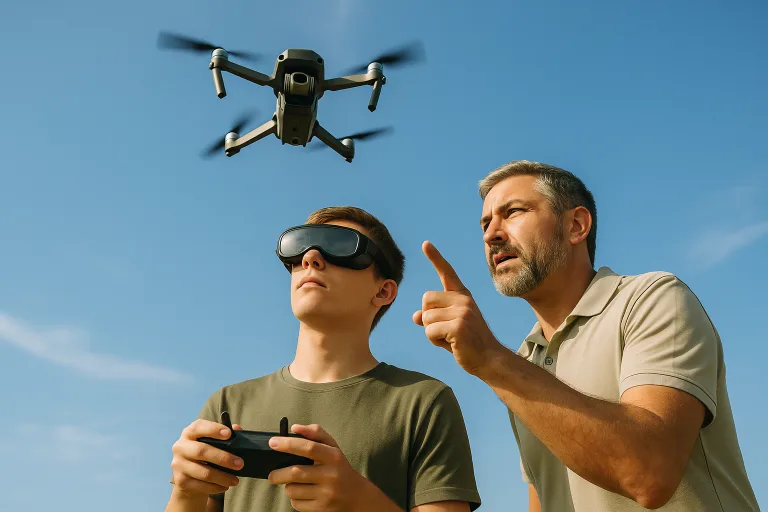
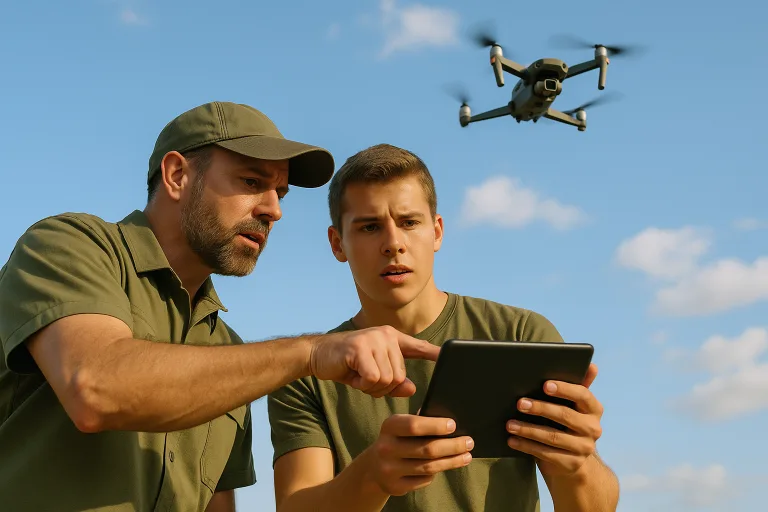
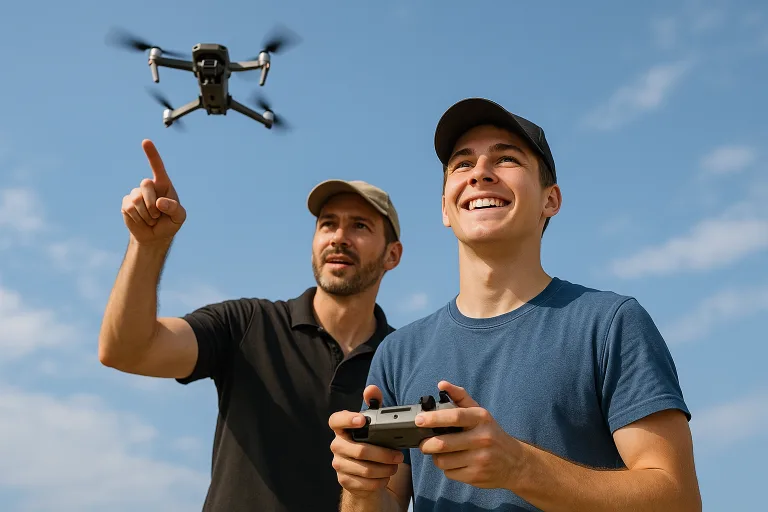
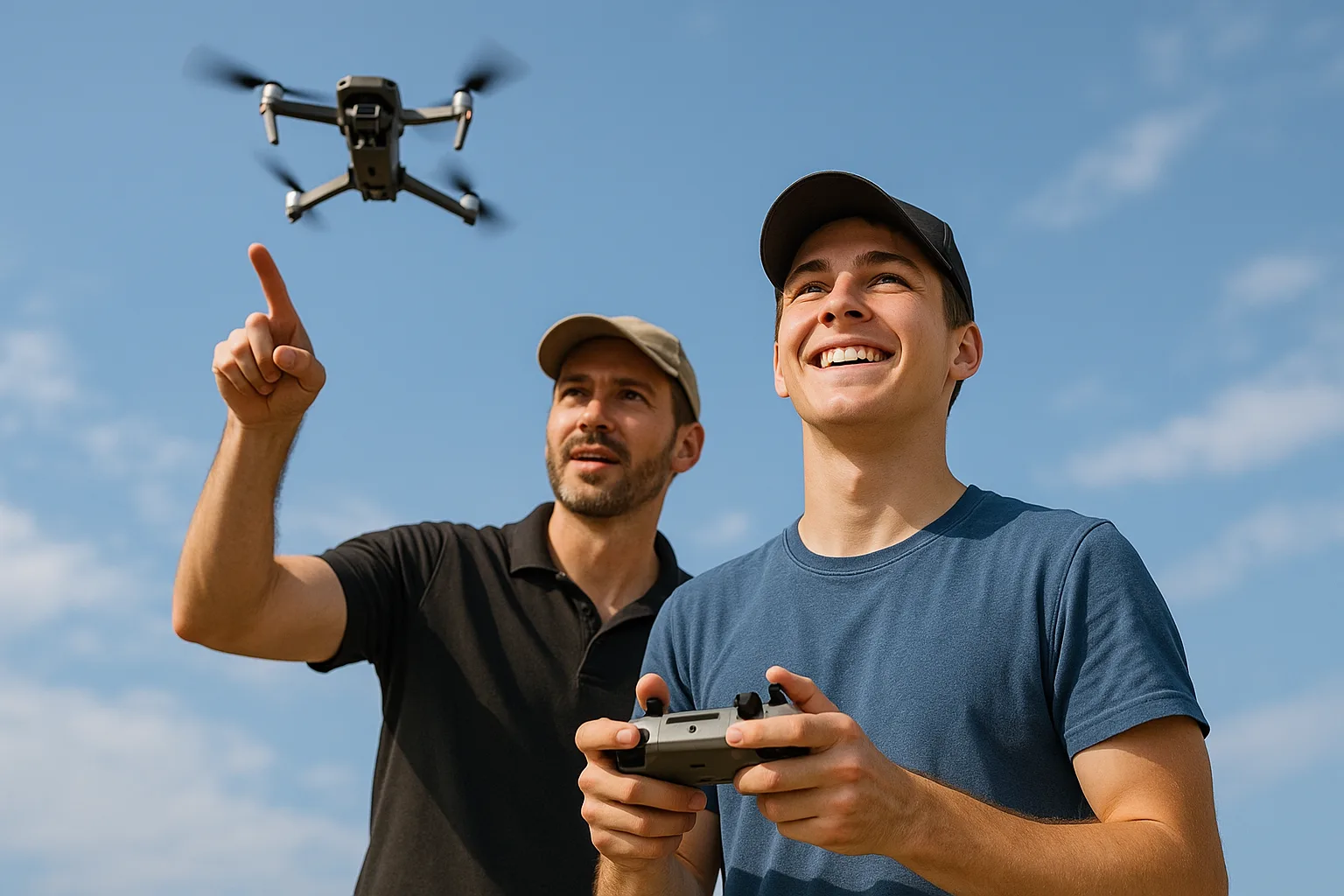
— Flight demonstration best practices and safety briefing methods
— Assessment design: practical checklists, scenario testing, written exams
— Quality assurance, recurrency training schedules, and instructor ethics
— Supervised teaching practicum with mentor feedback
Curriculum elements & learning outcomes
— Theoretical knowledge: air law, meteorology, avionics basics, human factors.
— Practical skills: safe manual control, complex mission execution, payload operation.
— Data skills: image capture protocols, post-processing (photogrammetry, orthomosaics), data delivery.
— Instructional skills (for instructors): clear learning objectives, assessment rubrics, debrief techniques, simulator-to-live transition methods.
Facilities, equipment & resources
— Classroom space with AV for theory sessions.
— Indoor flight hall for first flights and cold-weather training (optional but highly useful).
— Outdoor training area with controlled airspace access and varied terrain for scenario practice.
— Fleet mix: beginner trainer drones, mid-range mapping platforms, inspection drones with gimbals/thermal cameras, and at least one advanced unit for instructor demos.
— Simulators and mission planning software licenses.
— Maintenance tools, spare parts, batteries, and PPE (vests, cones, fire extinguisher).
— Data processing workstation(s) with photogrammetry/LiDAR software.
Instructor hiring & development
— Ideal instructor profile:
— Strong practical flight experience in multiple platforms
— Background in relevant industries (surveying, inspection, emergency services)
— Formal understanding of aviation regulations and safety management
— Good communication and training skills
— Start with a small core team, then develop internal instructor certification and recurrency training to scale safely.
Safety management & quality assurance
— Implement a Safety Management System (SMS) tailored for training operations.
— Standardize pre-flight checklists, risk assessments and incident reporting.
— Use structured debriefs and performance records for every student.
— Regularly review and update course materials to reflect regulatory changes and technology developments.
Business model & pricing considerations
— Revenue streams:
— Public courses for individuals and professionals
— Corporate/custom on-site training for industry clients
— Instructor certification and instructor recurrency courses
— Contracted services (inspections, surveys) as a training-to-work bridge
— Consider package pricing (basic + advanced + instructor add-on). Offer discounts for corporate groups and multi-course bundles.
— Factor in insurance, regulatory fees, equipment depreciation, simulator licenses, and instructor wages when setting prices.
Launch roadmap (first 6–12 months)
1. Market research: interview local employers (mines, plants, municipalities) to define course demand.
2. Regulatory check: confirm local permissions for training sites and registration requirements.
3. Secure funding / partnerships: local industry sponsorships, grants, or college collaborations.
4. Build core curriculum and procure equipment.
5. Hire/train initial instructors; run pilot courses and refine content.
6. Launch public schedule, pursue corporate contracts and continuous improvement.
Suggested immediate next steps
— Contact regional authorities and aviation regulators to confirm registration and airspace requirements.
— Arrange meetings with at least three potential industry partners (mining companies, municipal services, rail/transport